Local Landing Page Optimization in Oakland: Turn Neighborhood Searches Into Booked Jobs
Expand Your Google Maps Coverage. Get Found in More Local Searches.

What's Covered on This Page
- Local Landing Pages Start With an Audit, Not a Template
- Oakland Businesses Need Pages That Match Real Service Areas
- When You Don't Need a Separate Page for Every Neighborhood
- What Goes Into a High-Converting Local Landing Page
- How Local Landing Page Pricing Typically Works
- How long does it take to see results from local landing page optimization in Oakland?
- Do you build a separate landing page for every neighborhood in Oakland?
- What happens during the audit before you build my landing page?
- My calls dried up in one part of Oakland. Could my landing pages be the reason?
- What's the difference between a templated location page and the kind you build?
Local Landing Pages Start With an Audit, Not a Template
Quick Summary: A landing page for an Oakland business should never start with a template that just swaps in the city name. It starts with an audit of the existing website, Google Business Profile, and current rankings. This is followed by a gap analysis that determines what the page needs to say and prove. That audit-first process is the thesis of this article: real local optimization is built from evidence, not assumption.

Most agencies build local landing pages backward. They take a page that already ranks somewhere else, swap the city name and a phone number, and publish it under a new URL. That approach might produce a page fast, but it rarely produces a page that competes. It was never built against the specific gaps in that market. A page for an Oakland business has to answer different questions than a page three towns over: different competitors, different search volume, different review density on Google Business Profile, different existing rankings to build from.
The process that works follows four concrete steps, in order, every time: audit, identify gaps, implement, track. Skipping the first two steps is what separates a templated page from one built to convert and rank.
- Audit the existing website: crawl current pages, check for duplicate or thin location content, and review site architecture, load speed, and internal linking around the target address.
- Audit the Google Business Profile: check category accuracy, photo count, Q&A activity, review velocity, and whether the profile is fully claimed and verified for that location.
- Audit current rankings: pull actual keyword positions for the address and surrounding service area to see where the business already has traction versus where it's invisible.
- Identify the gaps: compare findings against what top-ranking competitors in Oakland are doing differently, whether that's schema markup, review count, or page depth.
- Implement fixes based on those specific gaps, not a generic checklist.
- Track rankings, calls, and form submissions after launch to confirm the page is closing the gaps it was built to close.
Competitors who template pages skip straight to implementation. They never audit the Google Business Profile tied to the address, never check whether existing rankings already have momentum worth protecting, and never verify what local competitors are doing better. The result is a page that looks locally relevant but performs like a copy, because it is one.
Oakland Businesses Need Pages That Match Real Service Areas
Here's the problem we see constantly. A contractor in Oakland builds one page that says 'serving Oakland' and calls it done. Google doesn't buy that. Maps rankings shift block by block, not city by city.
Rockridge is full of older craftsman homes and duplexes, the kind that need different repair work than the newer multi-family buildings near Jack London Square. A plumber who only optimizes for downtown Oakland misses both jobs. We build separate landing pages for each service pocket, so your site matches how people search in that specific area.
When a business owner tells us calls dried up in a certain part of town, it's because their page never mentioned that area at all. Google can't send you work it doesn't think you do there.
- Fruitvale's dense residential blocks need pages that speak to multi-unit and rental property work, not just single-family jobs.
- Temescal's mix of small commercial storefronts and homes calls for separate service language than a page built for pure residential.
- Areas near the Oakland hills often search with different terms tied to slope, drainage, and older wiring, so a generic page loses that traffic.
This is the core of it. If your landing pages don't name the real neighborhoods you work in and the real problems those areas have, Maps has no reason to show you there. One page can't carry that weight.
When You Don't Need a Separate Page for Every Neighborhood
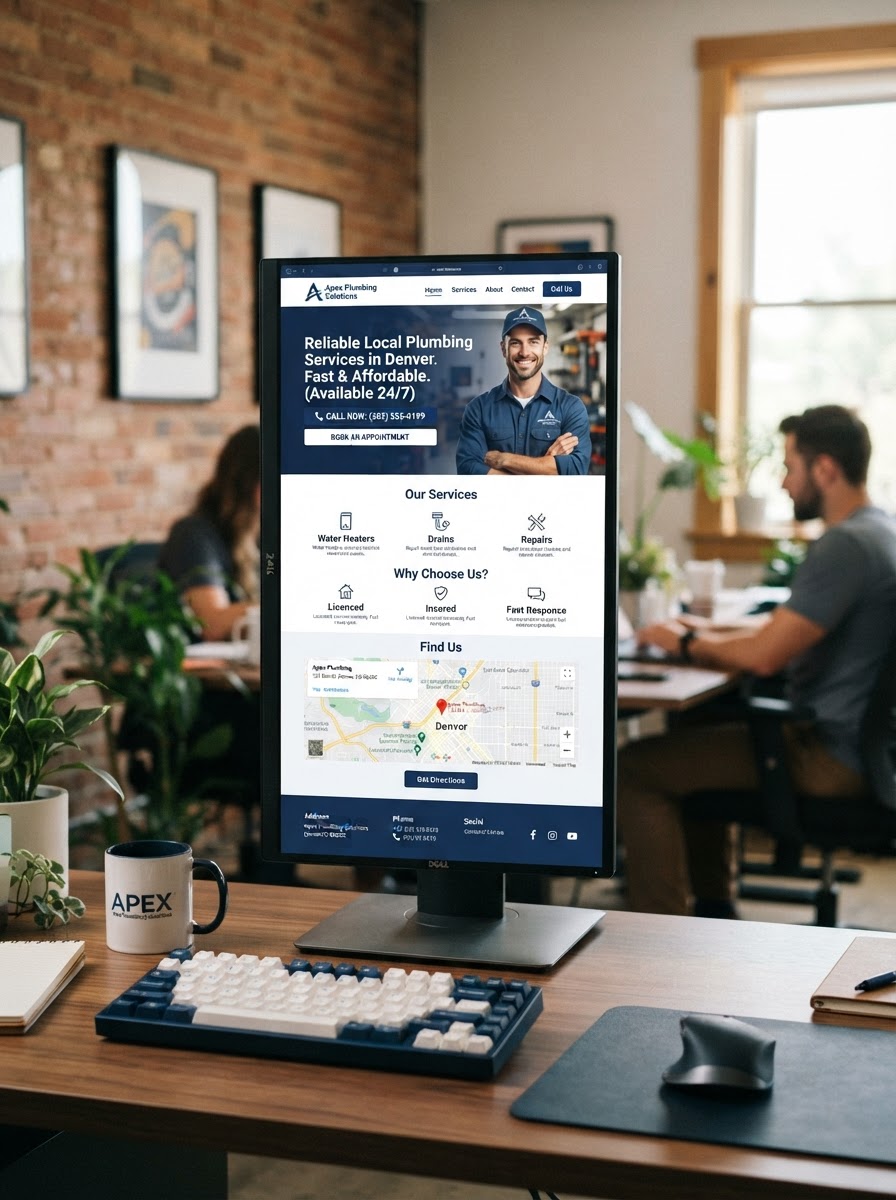
Not every business benefits from a sprawling network of neighborhood pages. Take a single-location service business in Oakland with a fixed, non-expanding service radius. A plumber or HVAC technician who only serves a 10-mile bubble usually performs better with one strong, primary location page than with fifteen thin pages targeting every surrounding suburb. Search engines and customers respond to depth and authority, not repetition.
The math matters here. If a neighborhood three miles away only generates a handful of monthly searches for your service, the effort required to research, write, optimize, and maintain a dedicated page rarely pays back. Content creation, internal linking, schema markup, and ongoing updates all cost time or money. When the search volume in a micro-area is negligible, that investment is better spent strengthening the main page with more detailed service descriptions, more reviews, and richer local proof.
There's also a credibility risk. Building a page for a neighborhood where you've never completed a job looks inauthentic to both readers and search engines. If a page claims expertise serving a specific pocket of town but has no project photos, no reviews from that area, and no real history there, it reads as manufactured. Customers notice. Google's local algorithms reward proof of genuine presence, like citations, reviews, and service records tied to real addresses, not keyword-stuffed pages built purely to rank.
- Your service radius has been the same for years with no plans to expand
- Search volume for surrounding neighborhoods is minimal or nonexistent
- You lack completed jobs, reviews, or testimonials from that specific area
- Your team can't realistically speak to hyper-local details of that neighborhood
- Maintaining more pages would stretch your content and resources thin
If any of these apply, resist the urge to chase every zip code. A single, well-optimized page centered on your actual base in Oakland, packed with genuine local signals, will typically outperform a scattered collection of shallow neighborhood pages that dilute your authority instead of building it.
Not sure what your Local Landing Page Optimization project needs? Ask us.
Get My Free Maps Scan. Thompson-SEO-Experts is ready to help.
What Goes Into a High-Converting Local Landing Page
A high-converting local landing page is built like a storefront, not a brochure. Every element should signal to both visitors and search engines that a real, findable business operates in that specific neighborhood. For a business in Oakland, this means the page should read as if it were written by someone who has walked the block, not generated from a spreadsheet of city names.
- Unique locally relevant content: mention nearby landmarks, cross streets, neighborhood names, or ZIP codes served. Describe how the service applies specifically to residents or businesses in Oakland rather than a generic metro area.
- NAP consistency: the business Name, Address, and Phone number listed on the page must match exactly what appears on the Google Business Profile, directory listings, and citations, down to suite numbers and abbreviations.
- Embedded interactive map: a Google Map showing your Oakland pin builds trust, helps with local pack relevance, and gives visitors an instant way to gauge distance and drive time.
- Structured data markup: LocalBusiness schema with address, geo-coordinates, service area, hours, and review ratings helps search engines understand the page as a distinct local entity eligible for rich results.
- Clear calls to action: prominent phone numbers, click-to-call buttons, appointment scheduling links, and direction buttons placed above the fold and repeated near the bottom of the page.
One detail many businesses overlook is alignment between the landing page and the Google Business Profile service area settings. If the profile lists a five-mile radius around your Oakland base, but the landing page claims coverage across an entire county, that mismatch can confuse Google's local algorithm and dilute relevance signals. Search engines cross-reference these signals. Consistency between what the profile promises and what the page describes directly affects whether the page earns local pack visibility or gets filtered out as unreliable.
This is also where high-converting pages diverge sharply from generic service-area boilerplate. A template page that simply swaps in a city name, without unique photos, local testimonials, or specific service details tied to that address, reads as thin content to both users and algorithms. Genuine local pages include details a competitor could not copy and paste: a photo of the actual building, a review from a customer who mentions the neighborhood, or a note about parking availability on-site.
How Local Landing Page Pricing Typically Works

Ask three agencies what a local landing page costs and you'll get three different numbers. That's normal in this trade. Pricing usually comes down to how many pages you need, how much research goes into each one, and whether someone's writing fresh content or just filling in a template.
Most shops price this work one of two ways. Some charge per page, treating each neighborhood or service-area page as its own small project. Others fold landing pages into a monthly local package alongside Google Business Profile work and citation building. The scope changes, the price changes.
A few things push cost up fast. A page built around real local details, road names, permit rules, building types in your area, takes longer than a page with placeholder text and a swapped city name. Ongoing updates matter too. A landing page that never gets touched again starts losing ground within months, especially in a market with new competitors popping up on Maps every quarter.
- Ask how many pages you need, not how many they want to sell you
- Ask if content gets written fresh for your business or recycled from a template
- Ask what happens after launch; does anyone check rankings or update the page
- Ask whether the page targets one clear service area or tries to cover too much ground
So don't judge a quote by the number alone. A cheap page that never shows up in Google Maps results isn't cheap, it's wasted money. We'd rather build fewer pages that pull in calls than a stack of thin ones nobody ever sees.
Frequently Asked Questions
Common questions about Local Landing Page Optimization
How long does it take to see results from local landing page optimization in Oakland?
Most businesses start seeing ranking movement within 60 to 90 days after launch. That timeline depends on how many gaps the audit finds and how competitive your neighborhood is. A page built for Rockridge, with less competition, can move faster than one built for downtown Oakland. We track rankings, calls, and form submissions after launch to confirm the page is closing the gaps it was built to fix. If nothing changes in that window, we go back and adjust the page.
Do you build a separate landing page for every neighborhood in Oakland?
No, not always. If your service radius stays fixed and search volume in a nearby area is low, one strong primary page usually works better than many thin ones. We only recommend separate pages for areas with real search demand and where you have actual project history, like Fruitvale or Temescal. Building a page for a neighborhood you've never worked in looks inauthentic and rarely helps rankings.
What happens during the audit before you build my landing page?
The audit checks your existing website, Google Business Profile, and current keyword rankings for your address. We look for duplicate or thin content, review your site's load speed and internal linking, and check your profile's category accuracy and review velocity. Then we compare your standing against competitors ranking in Oakland. This step happens before any writing starts, so the page targets your actual gaps instead of guessing at them.
My calls dried up in one part of Oakland. Could my landing pages be the reason?
Yes, that's a common cause. If your page never mentions a specific area, like the Oakland hills or Jack London Square, Google has no reason to show you there. Maps rankings shift block by block, not city-wide. A page built only for 'Oakland' in general misses the specific terms people near the hills use, like slope or drainage issues. Naming the real neighborhoods you serve, with the problems those areas have, brings those calls back.
What's the difference between a templated location page and the kind you build?
A templated page just swaps in a city name on a page that already ranks elsewhere, without checking what that address needs. Ours starts with an audit of your website, Google Business Profile, and current rankings before any writing happens. We compare your standing to competitors in Oakland to find real gaps, like missing schema or thin content. That audit-first process is why templated pages often look locally relevant but perform like a copy.
Ready to Get Started?
Get My Free Maps Scan. Call (408) 439-9589 today.
Related Services
Local SEO
Local SEO helps your Oakland business show up when nearby customers search for what you do — in Google Search, in Google...
Learn moreOn-Page SEO
On-page SEO ensures every page on your website is optimized to rank for the local search terms your Oakland customers ac...
Learn moreSEO for Contractors
Contractors win or lose based on whether the phone rings. We build local SEO systems for Oakland contractors that get yo...
Learn more